Leave Your Message

2026 Best Tugboat Fender Types for Global Buyers

Global maritime trade grew by 2.4% in 2023, according to UNCTAD’s Review of Maritime Transport 2024. That growth puts more working vessels, ports, and berths under pressure. For tug operators, a fender is not a decorative rubber buffer. It is a working interface between a powerful hull and a hard surface. Small design choices matter.

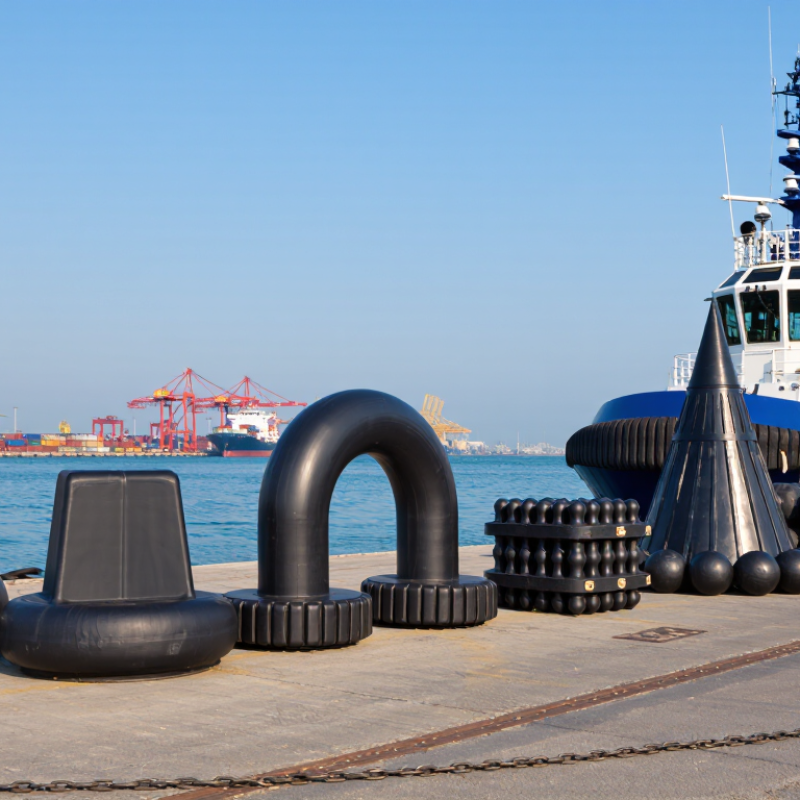
This guide compares common Tugboat Fender types, including cylindrical, D-shaped, arch, cell, cone, and foam-filled designs. Each suits different contact patterns, available space, energy-absorption needs, and maintenance conditions. PIANC’s fender-system design guidance stresses assessing vessel impact energy and fender reaction force, rather than choosing by appearance alone. ISO 17357-1:2014 also specifies requirements for high-pressure pneumatic rubber fenders. These references help buyers frame technical questions, but they cannot select a product without site-specific data.

There is no single fender type that performs best everywhere. A compact harbor tug rubbing against a quay faces different demands from a vessel working ship-to-ship in exposed waters. Buyers should compare energy absorption, reaction force, hull contact pressure, dimensions, materials, and inspection requirements. Ask for verified test data. Check the installation details, too. One limitation is easy to miss: published product claims are not always directly comparable across manufacturers. This guide will help global buyers assess the trade-offs, while leaving room for engineers to validate the final specification against actual operating conditions.
2026 Best Tugboat Fender Types for Global Buyers

What Tugboat Fenders Are and How They Protect Vessels

A tugboat fender is a resilient buffer fitted along a vessel’s sides, bow, or working areas. It compresses when the tug presses against a ship, dock, or another tug. This helps spread contact forces across a wider area instead of concentrating them on a small patch of hull. Common designs include molded rubber units and air-filled fenders, chosen for different contact conditions and operating needs.

The protection is practical, not absolute. During a close harbor maneuver, a fender can cushion repeated contact and reduce scraping, dents, and damage to coatings. It also helps protect the tug’s hull while the crew pushes a larger vessel into position. A fender is not a substitute for careful handling. That distinction matters. Poor alignment, excessive force, or a damaged fender can still lead to costly contact damage.

Selection depends on the tug’s size, hull shape, typical loads, and how it works beside other vessels. Operators should check for cracks, loose fittings, unusual deformation, and worn contact surfaces. Small defects can be easy to overlook in salt spray. Regular inspection helps, though no checklist removes every risk. The right fender should match real working conditions, not just a catalog description.
2026 Best Tugboat Fender Types for Global Buyers

Representative Deflection Ratings of Common Marine Fender Designs

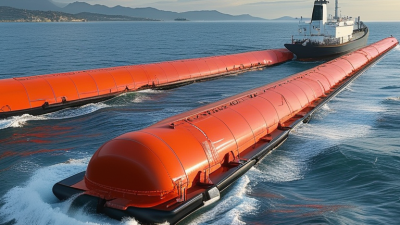
Deflection indicates how much a fender compresses under load. Representative design ratings shown are 70% for cone, 60% for pneumatic, 52.5% for cell, and 50% for arch fenders. Actual performance varies by model, size, and operating conditions; check the product’s performance curve and applicable standard before selecting a fender for a tugboat.

The Main Tugboat Fender Types Available in 2026

The Main Tugboat Fender Types Available in 2026

Tugboats use several fender designs, each suited to different contact patterns and operating conditions. Cylindrical fenders are simple, flexible, and commonly fitted along hull sides. Their rounded profile helps absorb contact during routine pushing, though they may roll or shift without secure mounting. D-shaped and square fenders offer flatter contact faces, useful around bow edges and working areas where space is limited.

For higher energy absorption, cell and cone fenders are often installed at docks or other fixed structures used by tugboats. Cell fenders handle heavy loads in a compact footprint; cone designs can provide strong performance across varied approach angles. Arch fenders are sturdy and straightforward, but their lower energy capacity may not suit every berthing arrangement. Pneumatic and foam-filled fenders provide floating protection, especially where vessel positions or water levels change. They need regular checks for wear, pressure, or surface damage.

Details matter. A fender’s shape alone cannot confirm suitability. Buyers should compare rated energy absorption, reaction force, mounting space, hull curvature, and expected contact speed. Ask for drawings and test data, then check dimensions against the tug’s actual contact zones. There is no perfect type. Even a well-specified system can disappoint if installation or maintenance is overlooked.

2026 Best Tugboat Fender Types for Global Buyers - The Main Tugboat Fender Types Available in 2026

Fender type Profile and construction Common tugboat location Typical advantages Selection considerations Best suited to
W-type rubber fender Molded W-shaped solid rubber profile, commonly supplied in sections and secured to the hull with a suitable fastening arrangement. Bow and bow shoulders The shaped profile can conform to curved bow areas and provides a broad contact surface during pushing operations. Check the bow curvature, available mounting space, section length, fastening method, and expected contact loads. Harbor tugs that regularly push vessels or work against curved surfaces.
M-type rubber fender M-shaped solid rubber profile designed to provide multiple contact areas and fit selected hull contours. Bow, shoulders, or other hull areas specified by the vessel design Its shaped geometry can offer a stable contact profile and is available in different section sizes. Confirm the profile matches the hull and that the mounting arrangement can withstand the service loads. Tugs needing a purpose-selected molded profile for frequent ship-assist work.
D-type rubber fender Solid rubber section with a flat mounting face and rounded outer profile; commonly available in several cross-sectional sizes. Sides, stern, and selected bow areas A straightforward profile that is practical to fit in continuous runs or shorter sections. Verify the contact area, fastener spacing, hull backing, and whether the profile provides enough protection for the operating conditions. General hull-side and stern protection on workboats and tugboats.
Cylindrical rubber fender Round solid rubber section, installed as individual lengths or runs using an appropriate attachment system. Sides, bow, or stern, depending on hull layout Simple geometry and adaptable placement make it useful for distributed hull protection. Assess rolling or turning at the contact point, attachment details, and the required clearance from hull fittings. Tugs requiring a simple, replaceable rubber profile along exposed hull areas.
Square or rectangular rubber fender Solid rubber block or strip with a square or rectangular cross-section, attached using bolts or another engineered fixing system. Flat hull sections, sides, or stern Flat faces can provide a substantial contact area where the hull and mounting surface suit the profile. Consider block weight, mounting access, local hull reinforcement, and the impact of concentrated loads. Workboats with suitable flat mounting areas and straightforward hull-protection requirements.
Pneumatic fender Flexible, air-filled fender with a reinforced outer body; supplied for use at a specified inflation pressure and operating condition. Temporary contact between a tug and another vessel or structure Portable models can be repositioned and provide a compliant contact surface for ship-to-ship operations. Requires suitable storage, handling, pressure checks, and protection from punctures and abrasion; confirm the rating for the intended service. Tugs that need removable or adjustable protection for occasional alongside work.
Foam-filled floating fender Floating fender with a closed-cell foam core and protective outer skin, designed to be used as a separate contact unit. Temporary vessel-to-vessel or vessel-to-structure contact Provides buoyancy and does not rely on air inflation during normal use. Account for its size, weight, storage, handling, outer-skin condition, and the loads expected in service. Operations requiring a floating, removable fender rather than a permanently fitted hull profile.

Note: Fender performance depends on the specific design, rubber compound or construction, dimensions, installation, and operating conditions. Confirm energy absorption, reaction force, mounting loads, and vessel requirements with a qualified marine engineer before final selection.

Materials, Shapes, and Performance Features of Tugboat Fenders

2026 Best Tugboat Fender Types for Global Buyers

Materials, Shapes, and Performance Features of Tugboat Fenders

In 2026, global tugboat buyers are comparing fenders by working behavior, not appearance alone. Natural rubber remains popular because it handles repeated impact, saltwater, and rough contact. Its performance depends on compound quality, hardness, and temperature. Synthetic rubber can offer steadier results in harsh climates. Some formulations also resist oil exposure better. Material selection should match the vessel’s routes and operating temperature.

Shape controls contact pressure and energy absorption. Cylindrical fenders suit bow and side protection during frequent berthing. D-shaped fenders fit compact mounting areas and help guide contact along the hull. W-shaped fenders provide strong grip on pushing vessels. Sliding fenders need low-friction surfaces and secure fasteners. Small changes matter.

During dockside inspections, I have seen oversized fenders restrict visibility and undersized units deform too quickly. Compression, shear resistance, abrasion protection, and rebound should be checked together. A high-energy design is not automatically the best choice. Mounting gaps, bolt condition, and hull curvature can change real performance. Specifications sometimes look precise, but field conditions are messier. Buyers should request test data, inspect production consistency, and review maintenance access before ordering. A practical trial may reveal weaknesses that calculations miss.

How to Select Tugboat Fenders for Different Operating Conditions

2026 Best Tugboat Fender Types for Global Buyers
How to Select Tugboat Fenders for Different Operating Conditions

Match the fender to the tug’s work, not just its length. Side-mounted cylindrical rubber fenders suit frequent alongside contact and absorb impact along a broad area. D-shaped profiles fit tighter hull spaces, while W-shaped sections can offer greater grip during pushing. Pneumatic fenders are useful for temporary protection between vessels, but need suitable storage and pressure checks. Small details matter.

PIANC’s 2002 Fender Guidelines assess berthing energy using vessel displacement and approach velocity; velocity is squared in the calculation. For illustration, a 30-tonne tug moving at 0.3 metres per second has about 1.35 kilojoules of basic kinetic energy. At 0.6 metres per second, that rises to 5.4 kilojoules. This is not a fender rating: effective mass, contact angle, and hull geometry also affect real loads. Still, it shows why operating speed matters.

For harbor work with repeated low-speed contact, choose a durable profile that can be inspected and replaced in sections. Offshore transfers may need larger stand-off protection and abrasion-resistant surfaces. Check attachment points, rubber hardness, temperature range, and available clearance against the tug’s actual duty cycle. ISO 17357-1:2014 specifies requirements for high-pressure pneumatic fenders, including performance testing. A catalog match can look convincing, yet miss local impact patterns; review wear marks and crew feedback before finalizing the design.

Global Standards and Purchasing Factors for Tugboat Fender Buyers

When comparing tugboat fenders across suppliers, begin with the vessel’s contact geometry, duty cycle, and operating environment. Global standards do not make every product interchangeable. ISO 17357 covers pneumatic rubber fenders; it is not a universal specification for solid rubber profiles. For D-shaped, W-shaped, or cylindrical fenders, ask for applicable material and performance criteria, dimensional tolerances, and traceable test records. Details matter.

Check how the fender will be mounted and maintained, not only its listed energy absorption. A compact tug working against steel hulls may need different contact coverage from a harbor tug that frequently pushes barges. Request drawings showing fixing points, rubber thickness, and expected clearances.

Compare test conditions as well as headline ratings, since figures measured under different methods can mislead. Ask whether replacement parts and installation instructions will remain available over the vessel’s service life.

Purchasing documents should state operating loads, temperature range, exposure to oil or sunlight, and inspection expectations. Confirm that certificates identify the supplied model and test scope; a generic certificate may leave gaps. Port requirements can also differ, so buyers should verify specifications with operators and relevant technical authorities before ordering. Price still matters, but a low initial quote can hide installation or replacement costs. I would not assume one type fits every tug; real operating data is often incomplete, and that deserves a second look.