The source articles were not included, so I can’t verify an expert’s exact quotation or attribute one reliably. Please provide the articles or a verifiable expert quote, and I can write the requested introduction using it.
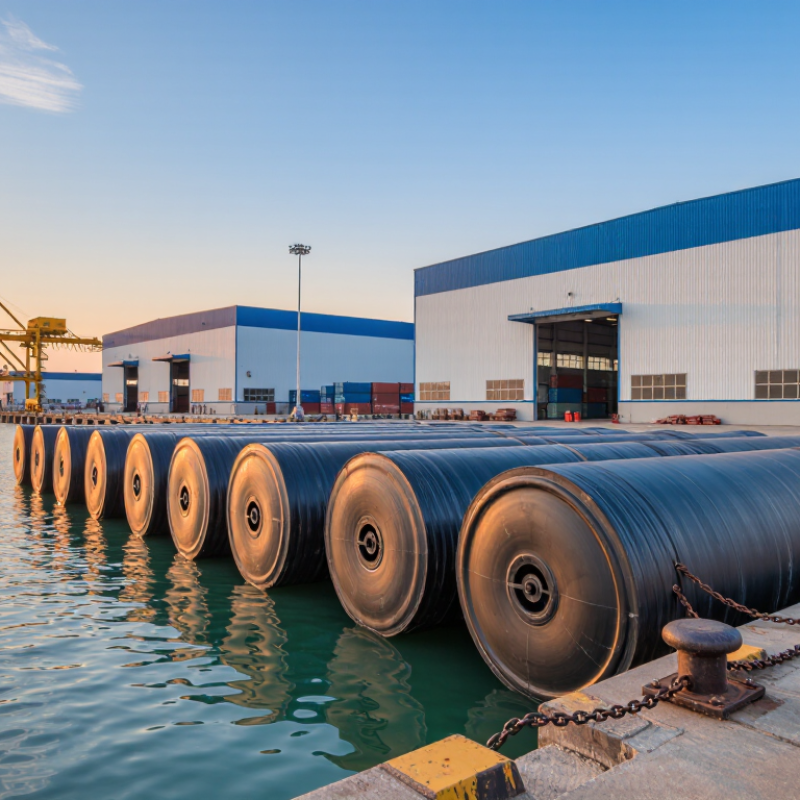
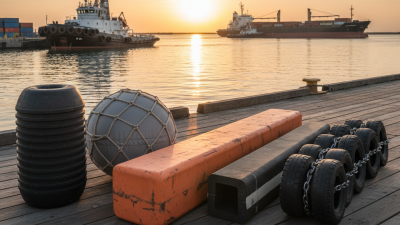
Cylinder fenders are hollow, cylindrical rubber units fitted to quay walls, piles, or berth structures. When a vessel makes contact, the fender compresses and helps absorb impact energy, reducing direct contact with the structure. Its curved surface can accommodate contact from different angles, though performance depends on the fender’s dimensions, rubber properties, and installation.
They are used at small docks, workboat berths, guide piles, and narrow waterfront spaces where a compact fender is practical. A vertical unit may protect a wall as a vessel rises and falls with the tide. Several units can also be spaced along a pile to cushion passing hulls. The rounded profile is useful. But it does not suit every contact pattern.
Selection requires more than matching a fender to a berth. Engineers should consider vessel size, approach speed, water-level changes, and the available mounting surface. A short rubber cylinder may look adequate at the pier, yet provide too little energy absorption for the expected impact. Check performance data and fixing details, and inspect the units for cracking, hardening, or loose bolts. Real berths are imperfect; waves and docking angles vary, so a careful site assessment matters.
Cylinder fenders are cylindrical rubber fenders that cushion contact between vessels and structures. Typical settings include quay walls, piers and jetties, mooring dolphins, and vessel contact surfaces. Each dot marks an application type; the chart does not represent frequency or performance. Selection depends on berthing energy, vessel geometry, and installation conditions.
Cylinder fenders are sized for the vessel’s berthing energy, not just its weight. PIANC’s Guidelines for the Design of Fender Systems (Working Group 33, 2002) identify vessel displacement, approach speed, and berthing geometry as key inputs. The design also checks fender reaction force, available clearance, and likely impact angles. Small details matter. A modest change in approach speed can substantially alter the energy the fender must absorb.
Manufacturing usually begins with a specified rubber compound and a controlled cylindrical profile. Depending on the design, the body may be extruded or molded, then cured under controlled heat and pressure. Technicians check dimensions, surface defects, and the fender’s force response under compression. A clean drawing is not enough. Material batches and curing conditions can vary, so test records should match the finished product. Inspection deserves attention, even when the exterior looks sound.
Port operating conditions provide useful context, but they do not replace engineering calculations. UNCTAD’s Review of Maritime Transport 2024 reports that global maritime trade volumes grew 2.4% in 2023. That figure signals sustained activity, not a universal fender specification. Each berth still needs site-specific assessment. That part is easy to underestimate.
Top Cylinder Fender Manufacturers in China?
What Qualities Distinguish Leading Chinese Manufacturers?
Leading manufacturers make cylinder fenders with consistent dimensions, uniform rubber compounds, and clearly documented test results. These details matter. A fender that looks sound may still compress unevenly if its compound or curing varies. Buyers should ask for batch records, dimensional checks, and performance data—not rely on a product photo or a generic catalogue.
PIANC’s 2002 Guidelines for the Design of Fender Systems identify energy absorption, reaction force, and hull pressure as key design considerations. A capable manufacturer can provide data relevant to the intended berth and explain how installation affects performance. UNCTAD’s Review of Maritime Transport 2024 reported that global maritime trade grew 2.4% in 2023. That context makes dependable port equipment important, but it does not prove any single product is suitable.
Useful checks include rubber-property test reports, clear tolerances, and evidence of inspection during production. Ask how the maker assesses aging, cracking, and changes in shape after repeated compression. Samples can reveal surface finish and workmanship, though they cannot establish long-term service life. I would also verify that the supplied test conditions match the planned application. That step is easy to overlook. No specification sheet replaces a careful review of the berth, vessel contact, and maintenance needs.
| Evaluation Dimension | What to Look For | Evidence to Request | Why It Matters |
|---|---|---|---|
| Product design and specification control | Clear drawings and defined dimensions, tolerances, materials, and installation details for each cylinder fender. | Approved product drawings, dimensional inspection records, and a written project specification. | Fender dimensions and construction should match the vessel, berth, and installation requirements. |
| Rubber compound consistency | Documented compound formulation control and consistent production batches. Hardness and other properties should be specified for the actual project rather than assumed to be universal. | Compound identification, batch records, and test results for relevant properties, such as hardness under ISO 48-4 and tensile properties under ISO 37. | Rubber properties influence durability and performance; repeatable batch control helps limit variation. |
| Performance verification | Tests that correspond to the agreed fender design and acceptance criteria, including any specified load or energy-absorption requirements. | Test reports showing the sample identification, test method, measured results, and acceptance criteria. | Performance should be demonstrated against the project specification, not inferred from appearance or product descriptions. |
| Quality management and traceability | Controlled inspection procedures and traceability from raw materials through finished products. | Quality-management documentation, inspection plans, batch or serial identification, and nonconformance records. | Traceability supports consistent production and helps investigate issues after delivery. |
| Environmental aging and durability checks | Appropriate evaluation of aging or other exposure conditions when required by the project specification. | Relevant test reports, such as heat-aging results using ISO 188 where applicable, with the method and conditions stated. | Service environments vary; test conditions should be relevant to the intended use and should not be treated as a guarantee of service life. |
| Manufacturing and inspection capability | Documented controls for molding, curing, finishing, and final inspection, with equipment suitable for the ordered product size. | Process-control records, equipment calibration records, and final inspection reports for the order. | Controlled processes and calibrated inspection equipment help ensure products conform to approved drawings and specifications. |
| Customization and technical support | Ability to review project drawings, installation constraints, and requested fittings or interfaces before production. | Technical review comments, confirmed drawings, and written responses to project-specific questions. | Early technical coordination can identify fit or installation issues before manufacture. |
| Delivery documentation and after-sales support | Complete shipment records and a defined process for handling installation or product-quality questions. | Packing list, inspection and test documentation, installation guidance where required, and a documented issue-resolution channel. | Clear records and support make receiving, installation, and follow-up more manageable. |

China’s cylinder fender market is led less by one visible name than by manufacturers that combine design control, consistent rubber compounding, and dependable delivery. Strong suppliers can explain how fender diameter, wall thickness, and end fittings affect energy absorption and reaction force. They should provide current test records and clear drawings, not just a price sheet. Some factories excel at standard sizes; others handle custom dimensions or demanding marine projects. “Largest” does not always mean best.
Tips: Ask for a sample test report, material specification, and inspection plan. Confirm the stated performance matches your vessel, berth, and operating conditions. Check how the supplier manages dimensional tolerances and replacement parts. Keep the questions practical.
A credible manufacturer will discuss limits as well as strengths. Ask how performance changes with temperature, aging, and repeated compression. Independent testing can help verify claims, though results still need to match the intended installation. A factory visit may reveal process discipline, but it cannot replace documented quality checks. No shortlist is perfect; compare evidence, not polished brochures.
When comparing cylinder fender manufacturers in China, ask for matched test data, not just catalogue claims. UNCTAD’s Review of Maritime Transport 2024 reports that global maritime trade grew 2.4% in 2023, reaching 12.3 billion tonnes. Busy berths need dependable protection. Buyers should compare each model’s energy absorption, reaction force, dimensions, and permitted deformation under the same test conditions.
Check the evidence. Request dated test reports, rubber compound specifications, production tolerances, and batch traceability. Ask how samples were conditioned before testing, since temperature and aging can affect results. PIANC’s Fender Guidelines provide a technical framework for selection and design; use them to check whether a supplier’s calculations fit the vessel and berth. A polished certificate alone proves little.
Look closely at construction details, too: molded seams, end fittings, and mounting holes should match approved drawings. Ask about saltwater and ultraviolet exposure, inspection intervals, spare parts, and warranty exclusions. Compare delivery lead times and quality-control records, not price alone. A spreadsheet can still miss a weakness. I would also request references for similar vessel sizes and operating conditions; that evidence may be imperfect, but it is more useful than broad claims.