China Top 10 Tugboat Fender Manufacturers introduces dependable suppliers for demanding port and shipyard operations. A Tugboat Fender must absorb impact, control friction, and protect steel hulls during pushing, berthing, and escort work. The right design reduces damage. It also supports safer daily handling.
Marine fender consultant Captain Robert P. Kunkel states, “A fender is effective only when it protects both the tug and the structure.” This practical view matters when comparing Chinese manufacturers. Buyers should examine rubber compound quality, compression performance, energy absorption, and recovery after repeated contact. Mold accuracy matters too. Small surface flaws may become serious under constant pressure.
This guide reviews ten manufacturers through an engineering-focused lens. It considers product range, factory capability, customization, testing practices, export experience, and service responsiveness. Some suppliers specialize in cylindrical fenders. Others produce D-fenders, sliding systems, and molded bow protections. Port conditions differ. So should the selection.
Evidence remains important. Ask for technical drawings, test reports, material data, and installation guidance. A low purchase price can hide higher replacement costs. That lesson is easy to overlook. Yet no ranking remains permanent. Manufacturing consistency may change, and published specifications may not reveal field performance. Readers should verify current certifications and project references before ordering.
The following manufacturers represent practical options for buyers seeking durable Tugboat Fender solutions from China. Expect strengths and limitations. Compare carefully. Real operations are rarely perfect.
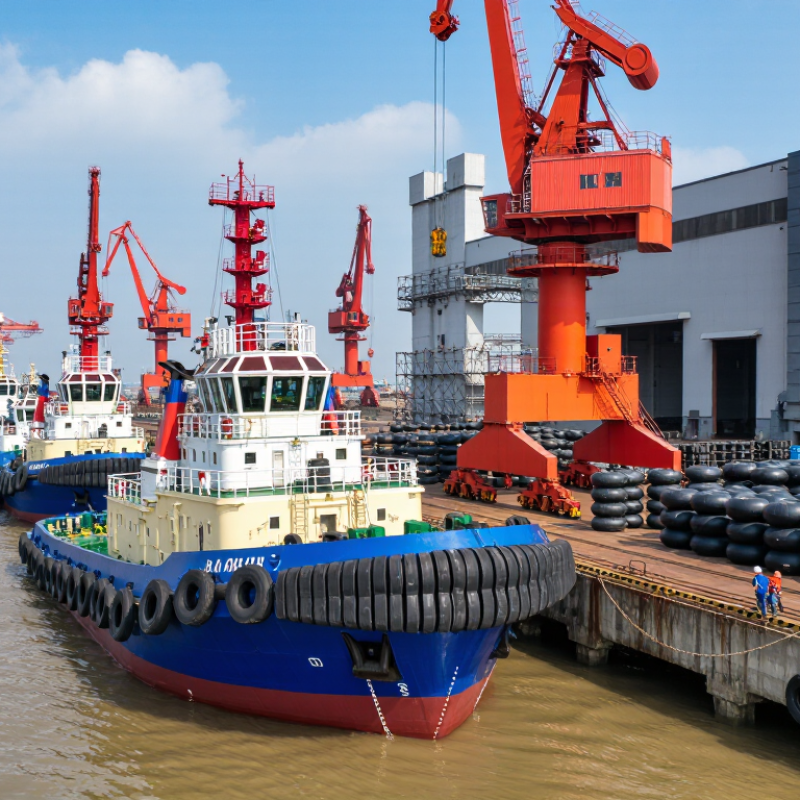
Tugboat fenders are protective systems fitted around a tugboat’s hull. They reduce impact between the vessel, barges, docks, and larger ships. Unlike ordinary cushions, they must manage repeated contact, sliding friction, and sudden loading. Their main purpose is to protect steel plating while preserving safe working distance. In busy ports, fenders may absorb energy during pushing, turning, and mooring operations. Small design errors can become expensive.
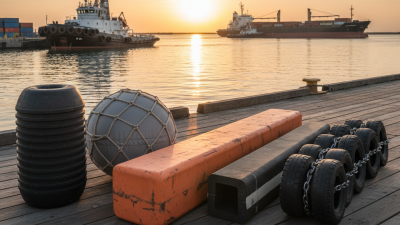
Key design features include material resilience, abrasion resistance, and controlled compression. Common profiles include cylindrical, D-shaped, W-shaped, and molded marine fenders. Each profile distributes contact pressure differently. A strong outer layer resists cutting from sharp hull edges. The inner structure must recover without permanent distortion.
Dimensions also matter. A fender that is too thin may bottom out against the hull. One that is too large can limit visibility or reduce maneuverability. Mounting chains, bolts, and backing plates require equal attention.
When comparing China’s top ten tugboat fender manufacturers, buyers should request compression data, material specifications, and inspection records. Practical checks should cover cracks, uneven wear, loose fasteners, and water absorption. Installation should match the tug’s displacement, contact speed, and operating waters. Tide changes and winter temperatures can alter performance. A clean drawing does not guarantee reliable service. Real conditions are less predictable, and this is where many evaluations need deeper reflection. Regular records make failures easier to understand and replacement timing more defensible.
Evaluating China’s Top 10 Tugboat Fender Manufacturers
Evaluating the top ten tugboat fender manufacturers requires more than comparing prices. Start with the fender’s working environment, including vessel size, berthing speed, seawater temperature, and contact frequency. Ask for rubber compound data, compression testing, energy absorption figures, and permanent deformation results. A serious manufacturer should explain how these values were measured. Vague answers are warning signs.
Inspect production evidence, not only polished catalog images. Request batch records, raw material traceability, dimensional inspection reports, and recent test samples. Check whether steel plates, chains, and rubber bodies match the approved drawings. A factory visit can reveal mixing equipment, curing controls, storage conditions, and basic cleanliness. Small details matter. Poor storage can damage rubber before installation.
Experience also comes from installation support. Ask whether engineers can review hull clearance, bolt layout, and expected shear loads. Reliable suppliers should provide practical drawings and respond clearly to technical questions. Independent inspection may strengthen confidence, especially for large harbor projects. However, certificates alone do not prove field performance. Speak with previous users when possible, and examine fenders after extended service. I would not rely on one impressive test report. Testing conditions may differ from real berthing impacts, and some project data can be incomplete. A careful buyer should compare several manufacturers, record assumptions, and leave room for follow-up checks.
| No. | Evaluation Dimension | What to Verify | Recommended Procurement Benchmark | Evidence to Request | Suggested Weight |
|---|---|---|---|---|---|
| 1 | Product Design Suitability | Whether the fender profile, diameter, length, mounting method, and contact area match the tugboat hull, working waterline, and operating conditions. | A documented design calculation and drawing approved for the specific tugboat application. | General arrangement drawing, installation drawing, dimensional tolerance sheet, and application questionnaire. | 15% |
| 2 | Energy Absorption and Reaction Force | Performance under compression, including energy absorption, reaction force, deflection, and allowable working range. | Test results must state the test method, deflection range, temperature, pressure where applicable, and rated performance values. | Verified compression curve, performance test report, and calculation showing suitability for the tugboat's berthing or pushing loads. | 15% |
| 3 | Rubber Material Quality | Rubber compound consistency, hardness, tensile strength, elongation, tear resistance, and resistance to ozone and weathering. | Material properties should be tested against the agreed specification using recognized methods such as ISO 37, ISO 34-1, ISO 48-4, and ISO 188. | Rubber compound specification, batch test report, raw-material traceability record, and laboratory test results. | 15% |
| 4 | Reinforcement and Structural Integrity | Strength and durability of internal reinforcement, steel inserts, chains, ropes, flanges, sliding plates, and attachment components. | All load-bearing components must have stated material grades, design loads, safety factors, and inspection requirements. | Material certificates, weld inspection records, reinforcement drawings, and component load calculations. | 10% |
| 5 | Quality Management System | Control of purchasing, production, inspection, nonconforming products, corrective action, and final release. | An independently verifiable ISO 9001 quality-management certification with a valid scope covering relevant rubber or marine products. | Current certificate, certification-body details, quality manual summary, inspection plan, and sample nonconformance report. | 10% |
| 6 | Inspection and Testing Capability | Availability of in-house or independent testing for dimensions, hardness, tensile properties, compression performance, bonding, and appearance. | Critical tests should be performed with calibrated equipment and traceable procedures before shipment. | Equipment list, calibration certificates, inspection and test plan, laboratory accreditation where applicable, and sample reports. | 10% |
| 7 | Marine Environment Resistance | Resistance to seawater, ultraviolet exposure, ozone, temperature changes, abrasion, oil contamination, and repeated impact. | The product specification must define operating temperature, chemical exposure limits, storage conditions, and expected service environment. | Environmental-resistance test results, storage instructions, operating limits, and maintenance recommendations. | 10% |
| 8 | Manufacturing Capacity and Lead Time | Ability to produce the required size and quantity consistently without compromising inspection or traceability. | A production schedule with confirmed tooling, raw-material availability, inspection milestones, packing date, and delivery terms. | Capacity statement, production plan, lead-time commitment, factory audit report, and shipment records with sensitive information removed. | 8% |
| 9 | Documentation and Traceability | Ability to trace each delivered unit to its material batch, production date, inspection results, drawings, and packing records. | Each unit or shipment should carry a durable identification mark linked to a complete quality dossier. | Certificate of conformity, packing list, product identification record, batch number system, and final inspection checklist. | 4% |
| 10 | After-Sales and Warranty Support | Responsiveness to installation questions, damage assessment, replacement parts, warranty claims, and technical documentation updates. | Written warranty terms should define coverage, exclusions, claim procedure, response time, and recommended inspection intervals. | Warranty policy, installation manual, spare-parts list, technical support contact, and after-sales response procedure. | 3% |
Evaluation note: The benchmarks above are objective procurement-screening criteria rather than performance claims about any individual manufacturer. Final approval should be based on application-specific calculations, contract specifications, witnessed testing where required, and verification of current certificates and test records.
China’s top 10 tugboat fender manufacturers serve ports, shipyards, and offshore terminals. Their products commonly use marine-grade rubber, reinforced chains, and molded steel frames. Field inspections show that fender performance depends on more than rubber hardness. Installation, vessel size, tide movement, and impact speed also matter. Measurements should be checked against recognized marine engineering standards. Small errors can become expensive damage.
Profile One focuses on compact fenders for harbor tugs. Profile Two produces large cylindrical designs for heavy berthing loads. Profile Three specializes in sliding fenders for narrow quay walls. Profile Four supplies foam-filled units for repeated, softer contact. Profile Five combines rubber sections with steel support plates. Profile Six develops custom shapes for shipyards and dry docks. Profile Seven serves offshore service bases with high-capacity systems. Profile Eight emphasizes replacement parts and fast delivery. Profile Nine provides testing records and installation guidance. Profile Ten works mainly on engineered projects with unusual dimensions.
These manufacturers differ in compound formulas, mold accuracy, and quality control. A reliable supplier should explain energy absorption, reaction force, and wear limits clearly. Factory visits can reveal mixing equipment, curing records, and inspection practices. Samples should be checked for cracks, uneven surfaces, and weak bonding. I would also request service references from comparable ports. No profile is perfect. Catalog claims may not reflect harsh winter water, sharp quay edges, or poor alignment. A practical review must consider lifecycle cost, not only the initial quotation. Availability can matter as much as performance during urgent maintenance.
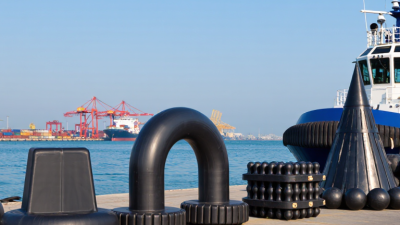
China’s top ten tugboat fender manufacturers commonly supply cylindrical, sliding, D-shaped, and cone fenders. Each design serves a different contact condition. Cylindrical fenders suit side protection during berthing. Sliding fenders help vessels move along steel guide rails. Cone fenders handle higher energy and angled impact more effectively. A reliable supplier should provide load-deflection curves, dimensional drawings, and inspection records. These documents support safer engineering decisions.
Material selection depends on water, vessel size, and operating frequency. Marine-grade rubber offers resilience and abrasion resistance. Reinforced rubber improves strength under repeated compression. UHMW-PE provides a low-friction surface for sliding applications. Steel frames need protective coatings, especially in saltwater ports. Rubber hardness must match the expected impact energy. Harder is not always better. Excessive hardness can increase hull pressure.
Customization may include length, diameter, bolt spacing, internal plates, color, and molded logos. Engineers should also confirm temperature range, tidal movement, and installation access. A practical inspection checks cracks, deformation, loose bolts, and uneven wear. Small defects matter. During selection, one overlooked detail can affect service life: drainage around the mounting area. No option fits every berth. A careful design review may reveal that the initial specification needs revision.
The chart compares typical solid-material density values commonly used in tugboat fender construction. Natural rubber, SBR, EPDM, polyurethane, and UHMW-PE are selected according to required abrasion resistance, impact absorption, weather resistance, friction, and service environment. Actual values may vary by compound formulation, reinforcement, hardness, and product design. Customization options commonly include fender profile, dimensions, mounting holes, steel inserts, bonding method, hardness, color, and surface texture.
China’s top 10 tugboat fender manufacturers should be compared through verified performance, not catalog claims. UNCTAD’s Review of Maritime Transport 2023 reports that ships carry over 80% of global merchandise trade by volume. Reliable fenders therefore protect costly hulls, terminals, and crews during repeated berthing. Experienced buyers check rubber compound records, dimensional tolerances, compression tests, and ageing results. ISO 17357-1 compliance is important for pneumatic fenders, while ISO 9001 supports consistent production controls. It does not prove product performance alone.
Certification depth separates the stronger suppliers. Look for independent inspection, batch traceability, pressure testing, and class approval where project rules require it. PIANC’s guidelines remain a useful engineering reference for fender selection and berthing-energy calculations. Still, certificates can be outdated. Verify the certificate number and issuing body.
Pricing needs careful interpretation. A lower quotation may exclude molds, flanges, testing, packing, or spare valves. Ask for a line-by-line offer and a five-year maintenance estimate. Delivery also matters. Standard pneumatic units may ship faster, while molded sliding or cylindrical fenders can require several weeks for tooling and curing. In practical purchasing, buyers should request production photos, test reports, and a pre-shipment inspection. That small delay can prevent a large replacement cost. The ranking is not absolute. Port conditions, tidal range, vessel size, and service support may change the best choice. UNCTAD data highlights the scale of maritime dependence, but it cannot measure supplier responsiveness. That remains a human judgment.